


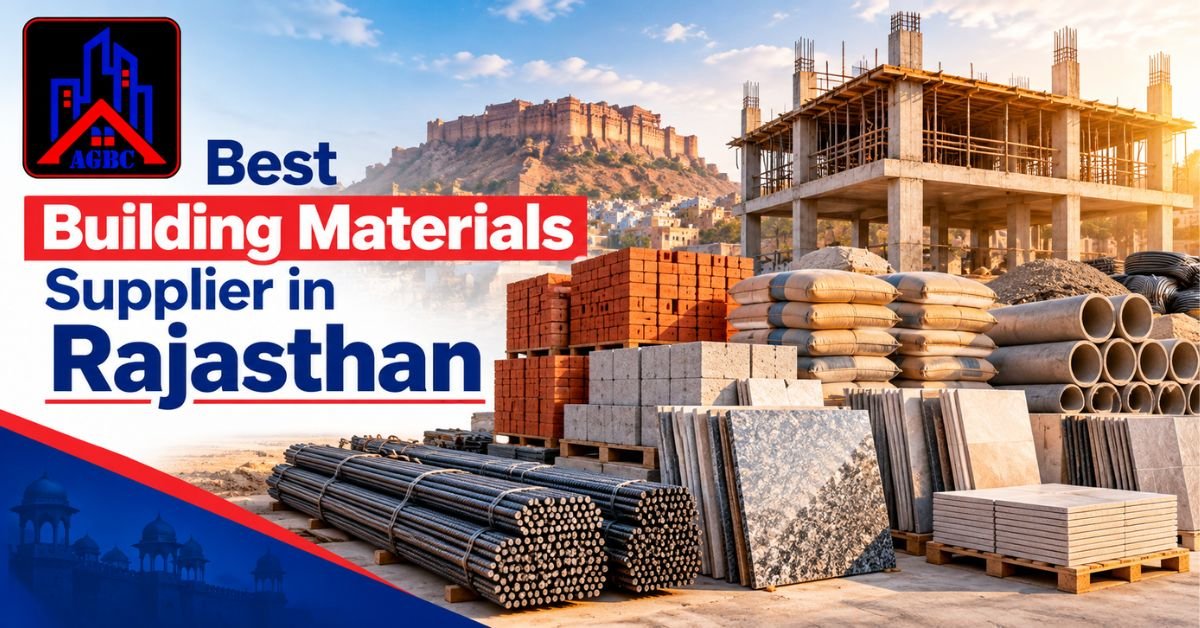
AGBC is an Udaipur-based company dealing in cement, TMT bars, blocks, waterproofing, and plumbing materials for builders and homeowners. If you’re searching for a building material supplier in Rajasthan, it’s what sits on the shelf that matters more than the name above the shop. A good yard has good brands, displays test papers, and delivers on time.
This guide starts with that company, then walks through the ten brands it claims to deal in. We did not rank competing stores. Without hard data, ranking competitors would be guesswork, so we relied on what the supplier’s website lists and public standards from the Bureau of Indian Standards (BIS). Let’s break it down.
Meet AGBC (ApnaGhar BizCorp Pvt. Ltd.)
The company is located at Mewar Industrial Area, Madri, Udaipur. It has three divisions to cater to building materials and everyday household products (HomeMart) and SAIL Salem 304 grade stainless steel utensils (SailSalemOnline.com). This is a guide for BuildMart, the construction arm.
BuildMart carries TMT bars, cement, walling solutions, steel products, roofing, construction chemicals, flooring, and sanitary items, including pipes and water tanks. Walling: AAC blocks, concrete blocks, fly ash bricks, and cement panels. The company has service stations at Udaipur, Chittorgarh, and Rajsamand. Its home page says it caters to home builders, contractors, architects, commercial projects, and industrial units. We are open Monday – Saturday, 9:30 am – 6:00 pm.
“It helps plan two things. The homepage states wholesale supplies include mill test certificates and site delivery. It also has a quantity estimator that estimates cement, TMT steel, AAC blocks, and sand or aggregate from a built-up area as per standard IS thumb rules. Use any estimator as a benchmark & validate your numbers with your engineer.
The 10 Brands Behind the Shelves
These ten names are from the “Authorised Dealers” section on the homepage and product pages. Each entry explains what the brand makes, what to look out for, and where they fit.
1. Tata Tiscon (TMT Bars)
Tata Tiscon is Tata Steel’s TMT bar brand. The supplier says it is strong, flexible, and suitable for RCC structures. The TMT bars are quenched, self-tempered, and air-cooled, providing a hard outer layer and a softer centre.
Check the bar grade. The number after “Fe” is the minimum yield stress in N/mm² as per IS 1786:2008. A “D” indicates a higher minimum elongation so that the bar stretches more before it snaps. Homepage. Tata and Jindal bars in Fe 550D, 8 mm to 32 mm with mill test certificates.
2. UltraTech (Cement)
The tagline on UltraTech’s homepage is “The Engineer’s Choice”. The cement website states that the brand is suitable for all construction projects, from houses to large buildings.
Cement is not one product. IS 269:2015 covers Ordinary Portland Cement and specifies five grades: OPC 33, 43, 53, 43S, and 53S, as per the BIS cement compendium. Before ordering, ask what grade your design assumes.
3. Shree Cement (Bangur and Rockstrong)
Shree Cement is one of India’s leading cement producers with plants in many states. Homepage: Bangur & Rockstrong. Names of lines.
BIS has laid down standards for 16 types of cement. Portland Pozzolana Cement is as per IS 1489 (Part 1), and Portland Slag Cement is as per IS 455. Blended cements do not behave like plain Portland cement. If your drawing specifies one type, do not switch to another type mid-project without approval from your engineer.
4. Wonder Cement
Wonder Cement has come up with a tagline, “Ek Perfect Shuruaat”, which means “a perfect start” in Hindi. It’s on the cement page for either residential or large structural work and stresses bonding and consistent quality.
Cement hardens by reacting with water in a process called hydration. So the work does not stop when the bag is empty. Keep fresh concrete moist while curing. Store unused bags off the ground and away from rain.
5. Jindal Panther (TMT Steel)
Jindal Panther TMT steel is featured on the homepage in the BuildMart, next to Tata Tiscon. Rebar only works if it’s in the right spot, so check the little stuff too.
The supplier provides couplers ranging from 12 mm to 32 mm, cover blocks ranging from 20 mm to 75 mm, and binding wire in three gauges. Nominal cover is specified in IS 456:2000 based on exposure conditions. That concrete layer protects the steel from corrosion and fire. Cover blocks hold it in place.
6. JSW Steel (Neosteel and Structural Steel)
On the home page, JSW is displayed as “Coated & Structural”. The TMT page says JSW Neosteel is manufactured using the Tempcore process and is said to be strong, ductile, and corrosion-resistant. It also has a good grip on concrete.
For structural work, you need other shapes. The supplier supplies MS channels, beams, angles, flats, round bars, pipes and rectangular hollow sections. Its channels, beams and flats are claimed to be IS 2062 compliant. Indicate the grade, size, and thickness in writing.
7. Kamdhenu Steel (TMT and Structural)
On the homepage, Kamdhenu is listed as “Structural & TMT”. Kamdhenu bars are cost-effective and fit for residential and commercial projects, including seismic zones: TMT page.
Compare steel brands when you compare steel brands. Match the grade, diameter, and test certificate. A lower price is not much of a help if the grades are different.
8. Dr Fixit (Waterproofing)
Dr Fixit is listed as Pidilite waterproofing, and the homepage mixes it with tile adhesives. The most water in a home falls on terraces, bathrooms, and ground-level walls, so these areas need a plan before the plaster goes on.
The supplier also lists Pidilite Terminator for termite protection and a wider range of chemicals. Ask each seller what system the manufacturer recommends for your surface and how many coats it will need.
9. UNIK GI Fittings (Plumbing)
UNIK GI fittings are marked as “Leak-Proof Joints”. The fittings are threaded to IS 554, and threading is done after galvanising, which keeps the threads clean. See the product page for more details.
Plumbing is hidden in walls, so mistakes are the most expensive to fix. The supplier lists IS 1239 Tata B Class (medium) and C Class (heavy) GI pipes. It also has SWR, CPVC, and UPVC pipes from Jain Plumbing, Ashirvad, and Supreme.
10. Zydex (Waterproofing Chemistry)
On the construction chemicals page, most of the waterproofing products are by Zydex. Zycosil Plus and Zycosil Max are silane-siloxane liquids which impregnate concrete and brick to create a breathable barrier. ElastoMax is a terrace coating that covers cracks up to 2.5 mm. ColdBond helps old and new concrete to bond at joints. The admixture Zycrete 2X is added to the mix.
Those figures are from the product pages, so take them with a pinch of salt. Before you buy, check the curing times, application steps, and coverage rates.
Why Rajasthan Projects Need More Than Cement and Steel
Summers in Rajasthan are hot, and heat seeps through the roof and walls into a house. The government’s training material on the Energy Conservation Building Code 2017 lists roof and wall insulation as ways to enhance thermal resistance. It also mentions that the lower the U-value, the better the quality of insulation.
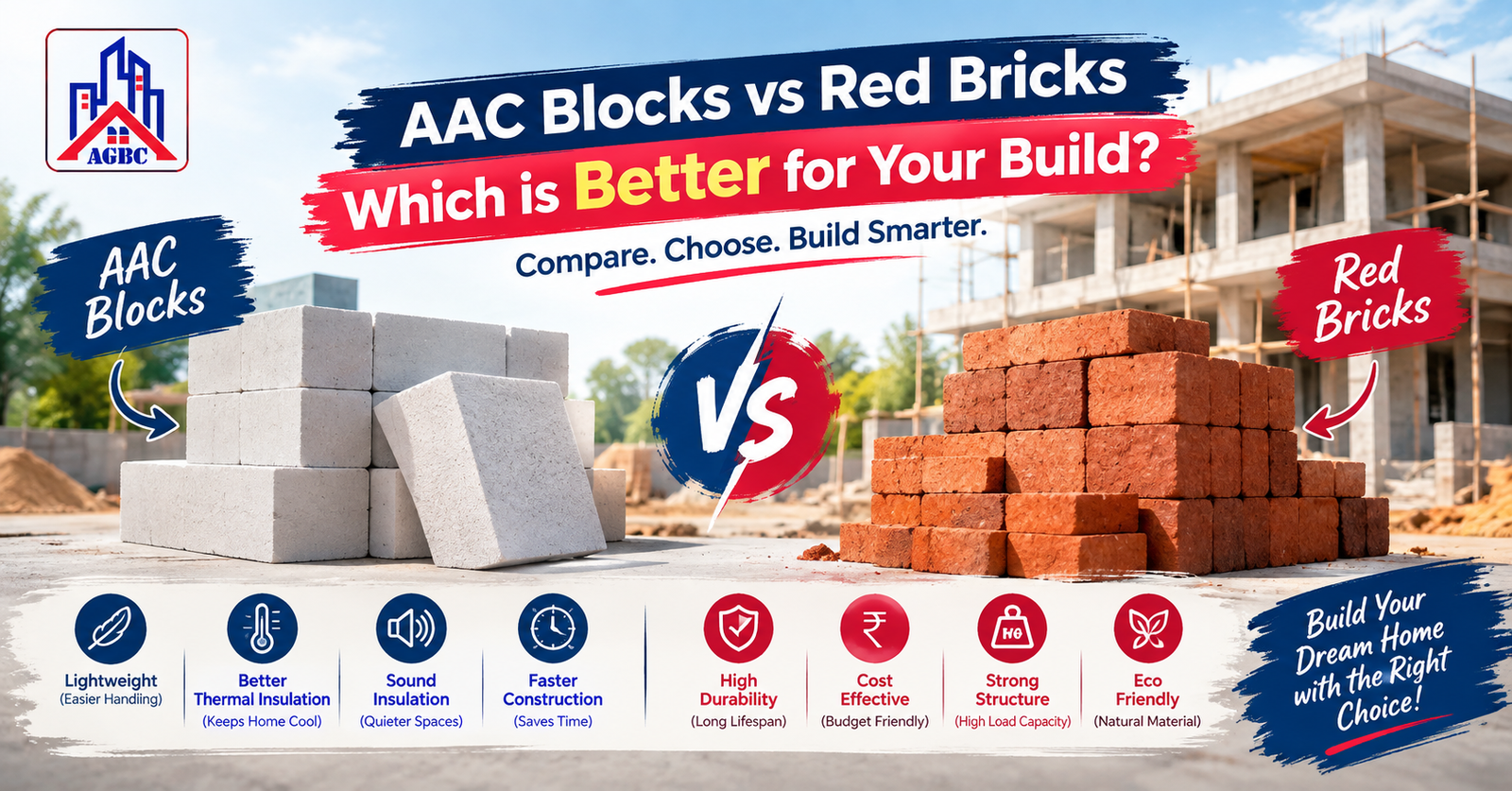
The supplier lists AAC blocks, a lightweight material that helps a wall resist heat, sound, and fire. It also includes Rinac PUF panels for roofs, walls, ceilings and floors for industrial, commercial and modular buildings. The homepage also discusses industrial sheds in RIICO areas, ideal for factories and warehouses requiring a quick insulated roof. For homes, combine insulation with a waterproof terrace to block out heat and monsoon rain.
Policy matters too, and it changes what you can build with. A MoEF&CC notification, first issued in 1999 and amended since, mandates fly ash-based products by construction agencies within 300 km of coal or lignite plants. The supplier offers fly ash bricks. Contact your local authority to find out if your site is within that radius.
How to Choose a Building Materials Supplier in Rajasthan
Before making an advance payment, check this checklist:
- Verify brand authorisation. The homepage lists the company as an authorised dealer of the above brands. Ask any supplier for dealer proof.
- Request test certificates. For steel, ask for a mill test certificate that corresponds to the batch you receive.
- Check for the ISI mark. You can use the BIS Care app to enter the licence number displayed on a product to identify the manufacturer, the status of the licence, and the products it covers.
- How would you rate your drawing? Look for IS numbers like IS 1786 for TMT bars, IS 269 for OPC, and IS 2185 for blocks.
- Contrast delivery and billing terms. Check whether the supplier delivers to your town and ask about dispatch and invoicing.
- Buy accessories together. The result is influenced by cover blocks, binding wire, block adhesive, and tile adhesive.
Before You Order
A good building yard builds trust with brands, papers, and clear answers. Begin with your drawing. Protect all surfaces from water and heat. Double-check all marks. For the full range, sizes, and catalogues, visit AGBC.
FAQs
How do I choose a reliable supplier in Rajasthan?
Select a supplier that stocks good brands, has dealer proof, test certificates, and confirms delivery to your town. Before making payment, check for ISI marks on the products through the BIS Care app.
How can I check if a product has a genuine ISI mark?
Open the BIS Care app and enter the licence number printed near the ISI mark. The app shows the manufacturer’s details, the status of the licence, and the products it covers. You can also report the misuse of the mark through the same app.
What does a mill test certificate show?
It records the test results for a batch of steel, such as chemical composition and mechanical properties like yield strength. You can match the certificate to the grade you ordered (Fe 500, Fe 550D, etc.) before bars go on site.
Which towns does the supplier serve?
The supplier’s website mentions Udaipur, Chittorgarh, and Rajsamand as service locations and claims to be serving builders across Rajasthan. Please check with the sales team that we deliver to your town before ordering.
What is the difference between OPC and PPC?
OPC is ordinary Portland cement as per IS 269:2015 with grades like 43, 53, etc. PPC is mixed with fly ash according to IS 3812 (Part 1) and IS 1489 (Part 1). They behave differently, so go with your design.

Leave a Reply